How the snowball method works
- Pay the minimum on every debt, every month.
- Put any extra money on the debt with the smallest balance.
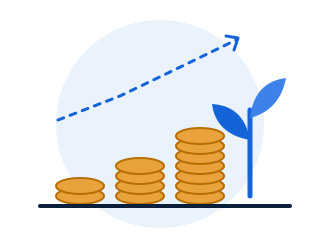
- When that debt is gone, add its minimum to the next smallest debt. Your total monthly budget never changes, but more of it goes to one target.
How it’s calculated
Monthly budget = sum of all minimums + extra payment
Each month:
1. interest on each debt = balance × APR ÷ 1200
2. pay every minimum
3. send what’s left of the budget to the smallest balance
4. when a debt reaches $0, its minimum rolls into the next target
Each month:
1. interest on each debt = balance × APR ÷ 1200
2. pay every minimum
3. send what’s left of the budget to the smallest balance
4. when a debt reaches $0, its minimum rolls into the next target
Worked example
Three debts with a $150 extra payment ($500 a month in total):
| Debt | Balance | APR | Minimum | Paid off in |
|---|---|---|---|---|
| Medical bill | $600 | 0% | $50 | Month 3 |
| Visa | $3,200 | 24.99% | $90 | Month 16 |
| Personal loan | $7,500 | 11.5% | $210 | Month 27 |
Debt-free in 27 months with $1,909 of interest. Paying only the minimums, with no roll-over, would take 66 months and cost $4,414 — so the plan saves $2,505.
When the snowball makes sense
If you’ve struggled to stick with a plan before, the early win of clearing a whole debt in the first few months can be worth a small amount of extra interest. If your smallest debts also have the highest rates, snowball and avalanche give the same result.